
Welcome to the World of White Rhino
White Rhino
Ceratotherium simum
Also known as: White rhinoceros
Average lifespan: 40–50 years
Primary habitat: Grasslands and savannas
Geographic range: Southern and eastern Africa
Overview
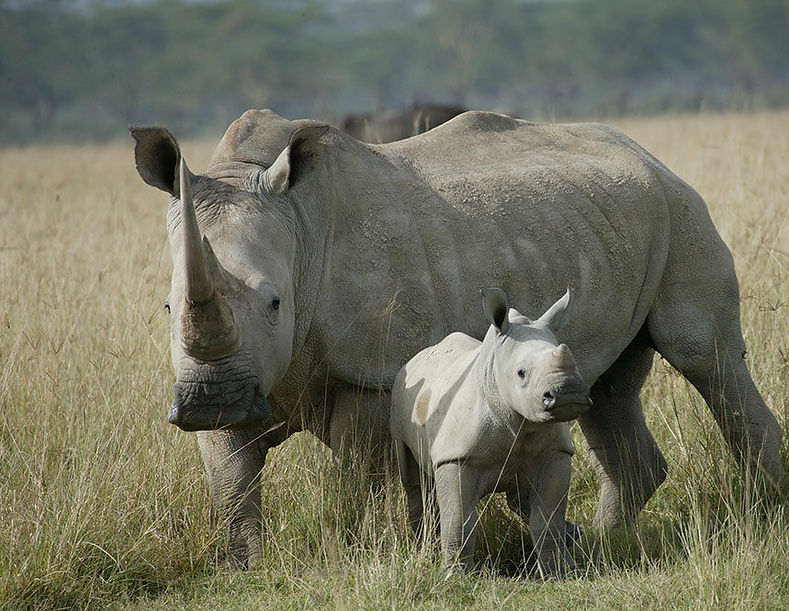
The white rhino is the largest living rhinoceros and one of the heaviest land mammals on Earth. Despite its massive size, it is primarily a peaceful grazer that plays an important role in shaping grassland ecosystems. Intensive conservation efforts have helped some populations recover, though the species remains under threat.
What It Looks Like
-
Massive, barrel-shaped body
-
Gray skin that appears pale in sunlight
-
Two horns made of keratin on the snout
-
Broad, square-shaped mouth adapted for grazing
-
Thick legs built to support extreme weight
How It Behaves
-
Mostly active during early morning and evening
-
Often seen alone or in small groups
-
Uses scent marking to establish territory
-
Relies on hearing and smell more than vision
What It Eats
-
Short grasses
-
Occasionally leaves or low vegetation
-
Strictly herbivorous grazer
-
Feeds for many hours each day
Life Cycle
-
Breeding occurs year-round
-
Gestation lasts about 15–16 months
-
Females give birth to a single calf
-
Calves stay with their mother for several years
Survival Skills
-
Thick skin for protection
-
Large size deters most predators
-
Strong sense of smell and hearing
-
Horns used for defense
Fast Facts
-
Largest rhinoceros species
-
Horns are made of the same material as human fingernails
-
Can run up to 30 miles per hour
-
Name comes from a misinterpretation of the word “wide”
Conservation
The White rhinoceros is a keystone grazer that shapes African savannas by maintaining open grasslands that support many other species. Although conservation has helped some populations recover, white rhinos remain threatened by intense poaching driven by illegal horn trade, along with habitat loss and political instability in parts of their range. Conservation efforts focus on anti-poaching patrols, protected reserves, translocations, international trade bans, and community-based conservation to secure the future of one of the world’s largest land mammals.